
- Your cart is empty
- Continue Shopping
Patan Patola Saree History: A Timeless Weaving Tradition of India
Home » Patan Patola Saree History: A Timeless Weaving Tradition of India
Table of Contents

Some fabrics are beautiful, and some fabrics carry stories. Patan Patola does both. The moment you see one, you can feel that it is not just silk woven into patterns, but history woven into threads. For centuries, this saree has stood as a symbol of patience, skill, and Indian heritage. Today, when you hold a Patan Patola, you are holding something that connects you to generations of artisans and royal traditions. This guide takes you deep into the History of Patan Patola Saree, explains the Origin of Patan Patola Weaving, and shows why this art still holds such a powerful place in Indian culture.
The story of Patan Patola begins in Gujarat, in the historic town of Patan. This place became the heart of one of the most complex weaving techniques in the world, known as double ikat. In this method, both the warp and the weft threads are dyed before weaving, and the design appears only when every thread meets its exact place on the loom. This is why Patan Patola is often linked with the Ancient Double Ikat Weaving Tradition, a technique that very few cultures have ever mastered at this level.
The Early Roots of Patan Patola
When we talk about the Traditional Patola Saree History, we are talking about a time when textiles were not mass-produced and when every important fabric had a purpose beyond fashion. Historical records and local traditions show that Patan Patola was already famous many centuries ago and was closely linked with royal families and wealthy merchants. These sarees were often given as royal gifts, used in important ceremonies, and treasured as symbols of status and respect.
The Origin of Patan Patola Weaving is deeply tied to Gujarat’s strong trade culture. Patan was an important centre for trade, and Patola sarees travelled to different parts of India and even outside the country. Kings, queens, and noble families valued them not only for their beauty but also for their rarity and craftsmanship.
Why Double Ikat Changed Everything
To understand the Patan Patola Saree Heritage of India, you must understand what makes its weaving so special. In normal weaving, designs are created while weaving the fabric. In Patan Patola, the design is planned first, and then both sets of threads are dyed in sections. Only after this long and careful preparation does the weaving begin.
This is why the Ancient Double Ikat Weaving Tradition is considered one of the most difficult textile arts in the world. If even one thread goes out of place, the entire design can be disturbed. This level of precision is what gave Patan Patola its legendary reputation and made it stand apart from all other silks.
The Cultural Importance of Patan Patola
Over time, the History of Patan Patola Saree became closely linked with Indian culture and traditions. In many communities, Patola sarees are still worn for weddings, religious ceremonies, and important family events. They are not just garments. They are part of rituals, blessings, and family heritage.
The Traditional Patola Saree History also tells us that these sarees were often passed down from one generation to the next. Mothers passed them on to their daughters, and families kept them safe as precious heirlooms. Even today, old Patola sarees are treated with great respect and care because they represent both art and memory.
The Role of Natural Colours and Motifs
One of the most beautiful parts of the Patan Patola Saree Heritage of India is its use of traditional motifs and natural colours. The designs often include flowers, parrots, elephants, and geometric patterns, each carrying its own cultural meaning. The colours, traditionally made from natural sources, stay rich and deep for many years.
These elements are not random decorations. They come from a long tradition where every pattern had a reason, and every colour had a place. This careful balance of art and meaning is a key part of the Origin of Patan Patola Weaving.
How the Craft Survived Through Centuries
Many traditional arts disappeared with time, but Patan Patola survived. The reason is simple. The families who practiced this craft treated it as a responsibility, not just a profession. The knowledge passed from father to son, from mother to daughter, and each generation protected the method with great care.
This dedication is a big part of the Ancient Double Ikat Weaving Tradition and also a reason this art remains rare and special even today. It was never about making large numbers. It was always about making something perfect.
Patan Patola in the Modern World
Today, Patan Patola stands at a beautiful point where tradition meets appreciation from a new generation. Designers, collectors, and lovers of handloom all over the world admire it. Yet the core process remains the same. The respect for tradition remains the same.
This is why the History of Patan Patola Saree is not just something that belongs to the past. It is still being written today by artisans who keep this art alive.
The Emotional Value Behind the Fabric
When you wear a Patan Patola, you do not just wear silk. You wear a story. You wear months of work, years of learning, and centuries of tradition. This emotional connection is a big part of the Patan Patola Saree Heritage of India and why people feel proud to own one.
How Patola by Nirmal Salvi Carries This Legacy Forward
At Patola by Nirmal Salvi, the focus is always on protecting and sharing this rich tradition. Every saree comes from authentic sources and follows the true method that defines Patan Patola. Patola by Nirmal Salvi does not believe in shortcuts or changes that weaken the art. The goal is to keep the soul of this craft alive while making it available to people who truly value it.
By working closely with artisans and respecting the real Traditional Patola Saree History, Patola by Nirmal Salvi plays an important role in keeping this heritage strong and meaningful in today’s world.
Why This Tradition Still Matters
In a time when most fabrics are made by machines, Patan Patola reminds us of the beauty of human effort. It reminds us that some things are worth waiting for and worth preserving. The Origin of Patan Patola Weaving and its journey through time show us what happens when art, culture, and dedication come together.
Why Choose Us
Patola by Nirmal Salvi stands for authenticity, respect for tradition, and genuine craftsmanship. We work only with true Patan Patola artisans and stay loyal to the original methods that define this art. Our focus is not just on selling sarees, but on sharing the real story, the real process, and the real value behind every piece. When you choose Patola by Nirmal Salvi, you choose heritage, honesty, and a deep connection to one of India’s greatest weaving traditions.
Conclusion
The History of Patan Patola Saree is a story of patience, skill, and cultural pride. From the Origin of Patan Patola Weaving in Gujarat to its place in royal courts and family traditions, this art has travelled through centuries without losing its soul. The Ancient Double Ikat Weaving Tradition still lives today because artisans and lovers of handloom continue to protect it. A Patan Patola is not just something you wear. It is something you carry forward. When you own one, you become part of the Patan Patola Saree Heritage of India, and that makes it both a duty and an honour.
To learn more about the history of Patan Patola or to explore authentic pieces, call +91 97007 49000 or email info@patolabynirmalsalvi.in and connect with us today.
Key Takeaways
- The History of Patan Patola Saree is deeply rooted in Indian culture and tradition.
- The Origin of Patan Patola Weaving comes from Gujarat and follows the rare double ikat method.
- The Ancient Double Ikat Weaving Tradition makes Patan Patola one of the most complex textiles in the world.
- The Traditional Patola Saree History shows its strong link with royal and ceremonial use.
- Patola by Nirmal Salvi continues to protect and share the Patan Patola Saree Heritage of India.
FAQs
What is special about the History of Patan Patola Saree?
It tells the story of a rare double ikat weaving tradition that has survived for centuries and stayed true to its original method.
Where did the Origin of Patan Patola Weaving begin?
It started in Patan, Gujarat, which later became the main hub for this special weaving tradition.
Why is Patan Patola linked with the Ancient Double Ikat Weaving Tradition?
Because both warp and weft threads are dyed before weaving, which is one of the most complex methods in the world.
What role does Patan Patola play in Indian culture?
It is often used in weddings and important ceremonies and is treated as a family treasure passed through generations.
Why should I choose Patola by Nirmal Salvi?
Because Patola by Nirmal Salvi offers authentic sarees, respects tradition, and shares the true story behind every piece.
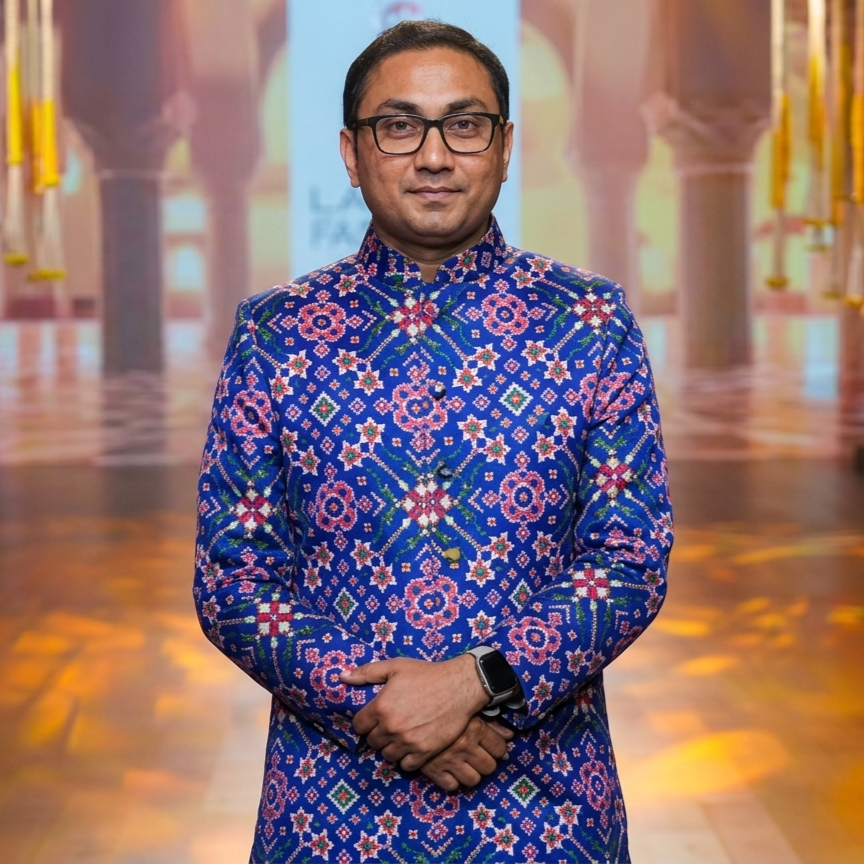
Mr. Nirmal Salvi
Founder, Patola by Nirmal Salvi
A passionate custodian of India's textile heritage, Nirmal Salvi carries forward a generations-old Salvi family legacy of authentic Patan Patola weaving. His GI-232 certified brand offers exquisite double ikat sarees, dupattas, and accessories across flagship showrooms in Ahmedabad, Mumbai, Delhi, and Hyderabad. His heirloom masterpieces have been cherished by Nita Ambani and gifted by Prime Minister Narendra Modi to the German Chancellor.
- Cultural Textile, Double Ikat, Gujarati Saree, Handwoven Saree, Heritage Saree, Indian Handloom, Patan Patola, Patola History, Silk Saree, Traditional Saree